Tesla's Model 3 has become one of the best-selling electric cars in the UK, and a growing pool of used examples, particularly Standard Range and Long Range variants that entered the market from 2019 onwards, is now accessible at mainstream prices. Used Teslas offer low per-mile running costs and a distinctive ownership experience, but they require a different pre-purchase approach than a conventional car. Body quality, 12V auxiliary battery condition, and high-voltage battery health all warrant specific attention. Confirming the vehicle's provenance via Carhealth remains essential.
Common issues to watch for on a used Tesla
These are the recurring concerns documented in the used Tesla market. A Carhealth check surfaces the data behind each one, from MOT advisory history to finance checks.
01
Panel gaps and body panel alignment
The Model 3, particularly earlier production years (2019–2021), attracted consistent criticism for inconsistent panel gaps and misaligned body panels. These are largely cosmetic concerns but can allow water ingress at door seals over time. Inspect body gaps carefully (around the bonnet, boot, and doors) and check door and boot shut lines during a physical inspection before purchase.
02
12V auxiliary battery failures
The 12V lead-acid auxiliary battery in the Model 3 powers the car's electronics when the high-voltage traction battery is not actively supplying energy. On early examples, this battery has a shorter-than-typical service life and can cause a range of symptoms when failing: door handles not presenting, touchscreens failing to initialise, and in some cases the car becoming temporarily unresponsive. Tesla recommends proactive replacement on older examples.
03
High-voltage battery capacity degradation
While Tesla's battery technology is robust, range capacity reduces over time and charge cycles. Significant degradation is more likely on very high-mileage examples or cars that were regularly charged to 100% and left at a high state of charge for extended periods. Tesla service centres can provide a battery report, and third-party diagnostic tools can estimate real-world remaining range.
04
Rear suspension component wear
Used Model 3 examples at higher mileages can show wear in rear suspension components, particularly upper and lower control arm bushings. The Model 3's relatively firm suspension tuning places more load on compliance components than a conventionally softer family saloon. Check the MOT advisory history via Carhealth for any suspension-related notes and listen for clonking over speed bumps during a test drive.
05
MCU touchscreen faults on older units
Earlier Tesla models used an eMMC storage chip within the media control unit that could fail after accumulated write cycles, leading to an unresponsive or very slow central touchscreen. Tesla has carried out proactive replacements and recalls in various markets. Confirm with the seller whether the MCU has been updated, and verify the touchscreen is fully responsive during a test drive.
Tesla recalls: DVSA data
DVSA lists 24 safety recalls for Tesla cars and light vans launched since January 2017. The most in a single year is 2025, with 5.
Recalls launched each year
20173
20182
20191
20201
20215
20224
20232
20241
20255
20260
2026 runs to 8 October 2026.
Models named in the most recalls
1Model 311 recalls
2Model X8 recalls
3Model S7 recalls
4Model Y7 recalls
A recall can name several models, so these counts overlap. Popular models also sell in far larger numbers, so a high count is not a ranking of quality.
Most recent Tesla recalls
R/2025/422
Model Y
Loss of Reverse Light Recall
R/2025/350
Model Y
Update Vehicle Firmware to Remedy Anti Pinch Feature of Right Front Window
R/2025/049
Model 3, Model X, Model Y
Loss of Rearview Camera Display Recall
R/2025/104
Model 3, Model Y
Update Vehicle Software To Rectify EPAS Functionality
R/2025/075
Model S, Model X
Update Vehicle Firmware To Restore Post-Crash eCall Functionality
R/2025/002
Model 3, Model Y
Update vehicle software to correct TPMS behaviour
R/2023/351
Model X
On certain MY 2021-2023 Model X vehicles the vehicle controller that detects the sensor voltage that indicates brake...
R/2023/350
Model X
A first-row seat belt was disconnected from its pretensioner anchor as part of a necessary step to perform a repair...
Why this matters on a used Tesla: an outstanding safety recall should be fixed free of charge by a franchised dealer, whoever owns the car now. The recall list above covers the make as a whole, not one car. A Carhealth report flags outstanding recalls for the specific vehicle you are looking at. You can also run the free GOV.UK recall check.
Source: DVSA vehicle recalls data, downloaded 8 October 2026. Cars and light vans only; each recall counted once.
Tesla MOT pass rates
In 2024, 82.4% of the 58,259 Tesla cars tested passed their MOT first time, against 71.6% for all cars. Comparing like with like by age, Tesla is 0.5 points above the all-cars rate for cars 6 to 8 years old and 2.7 points below the all-cars rate for cars 3 to 5 years old.
First-time pass rate by age of car
Cars aged 3 to 5 years83.2%
All cars 85.9%, so 2.7 points below the all-cars rate. 47,947 tests.
Cars aged 6 to 8 years79.2%
All cars 78.7%, so 0.5 points above the all-cars rate. 9,221 tests.
The blue tick on each bar is the all-cars rate for that age. Older cars fail more often, so compare within an age band.
Most common reasons for failing
1Tyres66.9%
2Lamps, reflectors and electrical equipment13.8%
3Suspension13.3%
4Visibility10.5%
5Brakes6.2%
Share of 10,238 Tesla cars that failed first time and had at least one fault in that DVSA category. A car can fail in several, so shares add up to more than 100%. The blue tick is the all-cars share.
Tesla models: first-time pass rate by age
First-time MOT pass rate for the most tested Tesla models, by age of car
Model
3-5 yrs
6-8 yrs
9-11 yrs
12+ yrs
Tests
Tesla Model 3
83.4%
-
-
-
41,301
Tesla Model S
84.4%
79.3%
73.6%
-
9,405
All Tesla cars
83.2%
79.2%
-
-
58,259
A dash means fewer than 1,000 tests in that age band, too few to quote.
These figures describe Tesla cars as a group. An MOT checks roadworthiness on the day, not running costs, so a high pass rate is not a promise about the car in front of you. A Carhealth report shows that car's own MOT history, including past failures and advisories. See how Tesla compares with every other make in the MOT pass rate rankings.
Source: Driver and Vehicle Standards Agency (DVSA) anonymised mot tests and results, 2024, Open Government Licence v3.0. Cars only, normal tests, cars aged 3 years or more.
Tesla model buyer's guides
In-depth guides to the most popular used Tesla models in the UK: what to check, what to avoid, and what a fair price looks like.
Every used Tesla check covers four critical risk areas, in one instant report.
Outstanding Finance
Checks finance records supplied by Experian for any active HP or PCP agreement. If found, the lender can repossess the car even from an innocent buyer.
Insurance Write-Off
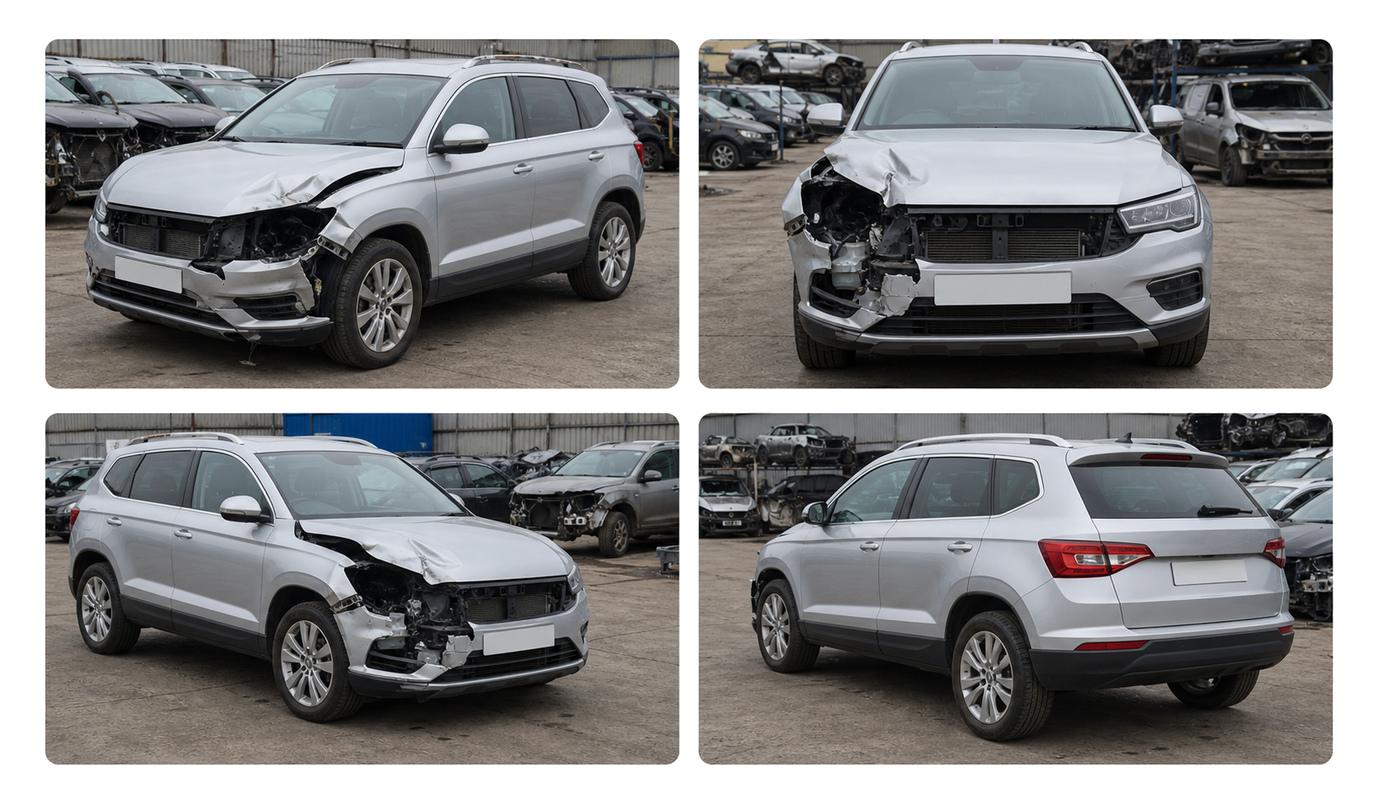
Cat A, B, S, and N insurance write-off status checked against insurer write-off records supplied by Experian. Free tools cannot show this.
Mileage Verification
Cross-references DVSA MOT odometer readings across the vehicle's lifetime to flag any mileage discrepancies or clocking.
Stolen Vehicle Check
Checks police-sourced records supplied by Experian for an active stolen marker against the vehicle.
What's included in your Tesla check
How Carhealth compares to traditional vehicle check services.
Best value
Carhealth Report
from
£19.99
Standard checks
Vehicle Tax Check
MOT History (Full)
Stolen Vehicle Check* (data provided by Experian)
Insurance Write-off Check* (data provided by Experian)
Mileage Verification* (data provided by Experian)
Scrapped/Imported Status* (data provided by Experian)
Outstanding Finance Check* (data provided by Experian)
Only with Carhealth
AI Analysis
Buyers Guide
Maintenance Required
Common Problems
Also in every report
Salvage & auction records* (data provided by Experian)
Common questions about used Tesla history check on Carhealth
The Model 3 electric drivetrain (motor, inverter, and high-voltage battery) is generally robust and has a low mechanical failure rate compared with internal combustion equivalents. The main concerns are build quality on early examples (panel gaps, trim fitment), 12V auxiliary battery service life, and the responsiveness of the MCU touchscreen on older units. Reliability improves significantly on post-2021 refresh examples. A Carhealth check confirms the vehicle's registration, mileage, and MOT history, which remain important data points for used Teslas.
Tesla authorised service centres can run a battery health report indicating remaining capacity. Third-party tools can give a practical indication of real-world range against the original WLTP figure. As a reference point, a new Standard Range Model 3 was rated at approximately 278 miles WLTP; degradation beyond 20% on a car under five years old warrants further investigation. Ask the seller for any Tesla service records referencing the battery, and always take the car on a meaningful test drive with the battery close to full charge.
Yes, it is possible. Tesla launched its own financing arm in the UK, and used Model 3s in the private market may originate from PCP agreements. Run a Carhealth history check to confirm no active finance agreement is recorded against the vehicle. The report also verifies the vehicle's identity data, which is useful for confirming a used Tesla's specification matches what has been advertised.
Start with a full charging test: plug the car into a Type 2 or CCS charger and confirm it accepts charge at the expected rate. Check the touchscreen is fully responsive and the rearview camera functions correctly. Inspect panel gaps around the bonnet, boot, and doors. Listen for rear suspension clonks over rough ground. Ask about 12V battery replacement history. Then run a Carhealth check to verify mileage, MOT history, and the absence of outstanding finance.
On a per-mile basis, charging a Tesla at home is substantially cheaper than fuelling an equivalent petrol car: typical home charge costs in the UK are around 2–5p per mile compared with 14–20p per mile for petrol. However, Tesla service pricing, tyre wear (EVs are heavier and can wear tyres faster than petrol equivalents), and any out-of-warranty repair costs should be factored into the total cost of ownership when comparing used options.